




Market report
Explore the boundaries of private-label appeal
Explore Branding Q3 2025 for research on how European consumers perceive home improvement brands and private labels. Use the category-level perspective to investigate where price matters most and where reassurance, reputation or familiarity continue to support branded choices.
Blogs I published 03 July 2026 I Dirk Hoogenboom
Where Private Labels Win in DIY and Where They Never Will
Where Private Labels Win in DIY and Where They Never Will
By now, we’ve established the talking points: macroeconomic shocks of the 2020s resulted in record-breaking inflation, supply chain blockages and a tight squeeze on household purchasing power. Retailers responded with better packaging, broader ranges and sharper pricing so private labels stopped looking like a cheap alternative and started looking like a credible option. It all sounds logical on paper, but there’s some nuance to how homeowners act under pressure worth looking at.
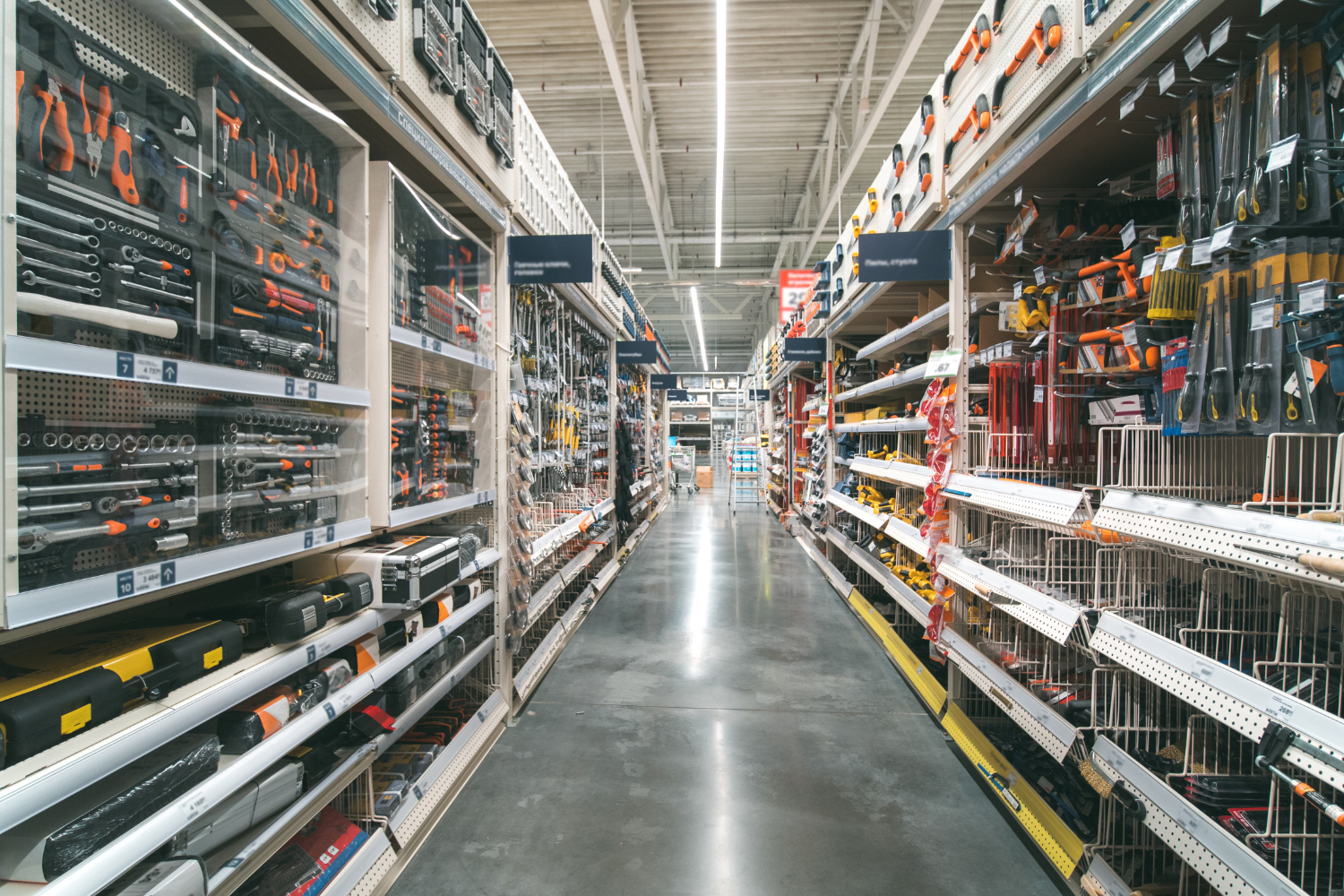
Picture a Saturday morning peak hour inside a tier-1 European DIY store. A customer is standing in the plumbing aisle, staring at a wall of brass fittings. To their left is a premium, legacy national brand they’ve seen for twenty years. To their right the retailer’s own private label box, cleanly designed, meticulously positioned and priced significantly lower. What do they do?
That micro-moment of hesitation isn’t an isolated shopping choice, but a telling data point for a mindset shift across home improvement. The question is no longer if private labels will disrupt traditional category management, but where their share will permanently consolidate. Let’s look at our Home Improvement Private Labels Webinar up-close.
Shoppers Changed Everything Except the Brand
When the cost of raw materials and logistics forced price hikes across the hardware sector, manufacturers braced for an immediate and catastrophic volume migration toward off-brand alternatives. The prevailing sentiment was “consumer loyalty will crumble instantly under inflationary pressure.”
Our research shows that European shoppers didn’t exactly run screaming into the arms of the cheapest available alternative. They devised a mix of workarounds before changing brand allegiances.
Nearly a third of the market simply absorbed the price shock. These consumers looked at the premium price tag, accepted the margin hit to their wallet and threw the exact same name-brand product into their basket. About 22% of buyers introduced a friction-filled research phase. They started comparing specs, reading reviews and checking if the premium justified the price tag. Over a fifth of consumers decided to upstage retail logistics; they kept their brand loyalty but ditched the retailer, opting for competing banners or rival e-commerce platforms.
Fifteen percent of the market opted out of the transaction entirely. Rather than trading down to a cheaper store brand, they put off the project in the hope that macro pricing would stabilize. Fourteen percent protected brand affinity by scaling down their project scope. They bought strictly to immediate need, shrinking the average basket size while maintaining the premium SKU brand.
Only a marginal 3% of consumers abandoned their brand on the spot. Consumers will rather alter how they buy, where they buy and when they buy than fundamentally alter what they buy.
Fig. 1: Consumer responses to hardware price increases. Only 3% (orange) abandoned their brand on the spot.
The Generational Fault Line: Under-35s Shop, Over-55s Stay
There’s also a demographic polarization here. Younger buyers are fully flexible and have zero historical brand sentiment. Only 19% of the 18-34s kept their purchasing habits intact. To them, the hardware store is a place of pragmatic decisions, meaning there’s a high willingness to hunt for value and sample tiered private labels.
The over-55 demographic is an absolute bedrock of traditional brand equity. 47% of consumers outright refused to modify their purchasing behaviors. If a trade professional or dedicated DIYer in this bracket has trusted a specific structural adhesive or hand tool for thirty years, they will pay a massive premium to keep things as is.
19%
kept their purchasing habits intact
47%
outright refused to modify their purchasing behaviors
Private Label Share Is Settling, Not Surging
As we enter the mid-2020s, the panic-buying of store brands has stabilized into a mature, predictable balance.
Positive consumer sentiment for store brands sits at 46%. While this is a minor drop from the inflation peak of 49%, a permanent baseline is locked in. When specs and price match, 51% of shoppers go for the private label.
This preference, however, does not translate to a blank check for private label expansion:
| Segment | Private label share |
|---|---|
| Total sector share | projected to stabilize between 25% and 35% |
| Accessories & hand tools | a tight 30% |
| High-volume commodities | capping between 40% and 60% |
| Technical categories | strictly restricted to 10% to 25% |
Paint Brushes vs. Boilers: The Cost of Failure Decides
The underlying force dictating volume caps isn’t retail distribution or marketing budget; it’s rather a fundamental rule of human psychology: the perceived cost of product failure.
Where Cheap Wins: The Zero-Consequence Categories
If a private label wall plug suffers a structural failure behind a drywall installation, the consequence is a slightly askew picture frame or a minor patch job. The cost of failure is essentially zero because there is no financial liability or physical hazard. So consumers – and even tradespeople – are more than happy to pocket the savings and opt for the store brand.
This low-risk calculation explains the complete dominance of private label preference across standardized, non-mechanical categories:
Fig. 2: Private label preference (orange) in low-risk, standardized categories.
In these commodity categories, manufacturing standards are heavily globalized, product differentiation is razor-thin and the national brand premium is nearly impossible to justify.
Trust Still Has a Price
Now, walking across the store to the climate control and home security aisles. The risk equation goes through a total inversion because the cost of failure becomes immense and complex. If something goes wrong with a private label central heating boiler or smart deadbolt, you’re dealing with a frozen hydronic system, thousands of euros in water damage or a compromised security perimeter.
When the stakes shift from cosmetic to systemic, consumers and installers go right back to brands they know and trust. Price gets people to try a product once. Trust gets them to install it in their house. That’s why technical categories belong to established brands.
Fig. 3: National brand preference (petrol) in high-risk, technical categories.
In these premium strongholds, an A-brand’s heritage, field support networks and multi-year warranties are ironclad. They say reliability, longevity, practicality and peace-of-mind. The non-negotiable adjectives.
Divide the Battlefield, Don’t Defend It All
The conversation around private labels is more about consumers making calculated decisions than cheap vs. quality options. Most won’t think twice about saving €15 on a roll of duct tape or a paint brush. But for a boiler or front door lock, saving money becomes secondary to knowing things will perform for the next twenty years. So, private labels aren’t replacing national brands. They’re replacing them selectively.
For retailers, that means growing a private label where it naturally belongs instead of forcing it into any and every given category. For manufacturers, the message is just as clear. Products should be difficult to replace – you get there through engineering, warranties, installer confidence and proven performance.
The industry hasn’t chosen a winner between private labels and national brands, and it won’t any time soon. It has divided the battlefield between common sense and practicality. Companies that understand the difference won’t waste time defending the wrong products, or trying to force them where customers simply won’t follow.
Tailored market research
Defend the value customers recognise
Private labels do not compete in the same way across every category. USP can help you understand where your brand earns preference, which customers are open to switching and what value supports your price position.
Branding Research
Measure your brand’s position against private labels and other competitors to identify the associations and preferences that remain distinctive within your category.
Pricing Research
Test how customers respond to different price gaps and value propositions, helping you assess the premium they will consider for your brand.
Market Segmentation Research
Identify buyer groups with different levels of brand attachment, perceived risk and price sensitivity so your response to private labels is more targeted.

Read more

16 October 2024 I Dirk Hoogenboom
Home Improvement Brands and Private Labels vs. A-Brands
06 January 2025 I Dirk Hoogenboom
Branding in Construction and Home Improvement

10 June 2024 I Dirk Hoogenboom
A Five Step Guide to Determining the Optimal Product Price

13 May 2025 I Dirk Hoogenboom