




Market report
Understand electrical BIM adoption
Explore BIM and Digital Tools Q4 2025 for research on electrical installers’ BIM use, project involvement and adoption barriers. Compare market differences to assess which customers need digital product information and where further support may be relevant.
Blogs I published 29 January 2024 I Dirk Hoogenboom
Steady Growth in BIM Adoption Among European Electrical Installers
In recent years, the adoption of Building Information Modeling (BIM) among European electrical installers has been steadily on the rise. While the growth has been gradual, the numbers are indicative of a positive trend in the industry. According to recent data from our European Electrical installation monitor on BIM, the usage of BIM among electrical installers increased from 5% in 2018 to 11% in 2023, showcasing a slow but continuous upward trajectory.
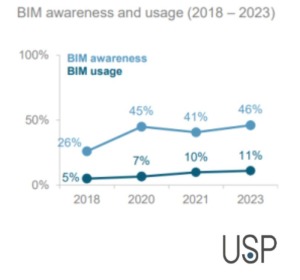
Unsurprisingly, larger installation companies are at the forefront of BIM integration. Approximately 17% of electrical installers with 15 or more employees have embraced BIM. Although this percentage may seem modest, it signifies a significant shift in the industry’s approach to digital construction methodologies.
In comparison to other professionals in the construction sector, such as architects with a 41% BIM adoption rate, electrical installers have a lot of catching up to do. However, the variance in adoption rates is largely attributed to the distinct position installers hold in the business value chain.
A key factor influencing the adoption rate among installers is the nature of their projects. Unlike architects, who predominantly focus on new builds, electrical installers engage more frequently in replacements and renovation work. BIM usage is more prevalent in new construction projects compared to renovation work, hence the fact that especially smaller installers are not confronted with BIM as often.
When examining country-specific trends, the Netherlands emerges as the front runner in BIM adoption among electrical installers. Conversely, Germany exhibits the lowest rate of BIM integration. The regional disparities highlight the diverse landscape of BIM utilization across Europe.
Looking ahead, it is anticipated that BIM adoption among installers will continue its slow and gradual pace. As mentioned earlier, not all types of projects align with the usage of BIM. Moreover, the financial investment required for the necessary software and training remains a barrier for many smaller installation businesses. Furthermore, many installation companies, especially again the smaller ones, don’t see any benefit of working in BIM.
Tailored market research
Focus your BIM offer where it is needed
BIM requirements differ between a small renovation installer and a larger project business. USP can help identify relevant customer groups, test support concepts and understand the route through which digital product information affects specification.
Market Segmentation Research
Identify electrical installer groups by project mix, company size and digital requirements to distinguish customers who need BIM support from those with different priorities.
Product Development Research
Test BIM-related tools and information-service concepts with intended electrical users, exploring the practical benefits and barriers they perceive before adoption.
Customer Journey Research
Map where electrical installers and project partners find, assess and use your digital product information during specification and purchasing decisions.

Read more

26 February 2026 I Dirk Hoogenboom
BIM and Digital Tools – Digital Maturity Without the Hype

30 January 2024 I Dirk Hoogenboom
Electrical Installers’ Expectations towards Manufacturers regarding BIM

02 July 2024 I Dirk Hoogenboom
BIM adoption among European HVAC installers remains low

11 June 2025 I Dirk Hoogenboom